 pluna
pluna

You
You go to it
You have to remember it, open it and keep it tidy. One busy week and you stop.
Pluna breaks your goals into milestones, books the work into your calendar, and checks in with you every morning.
From $6.67 a month · 7 days free on yearly
The setup
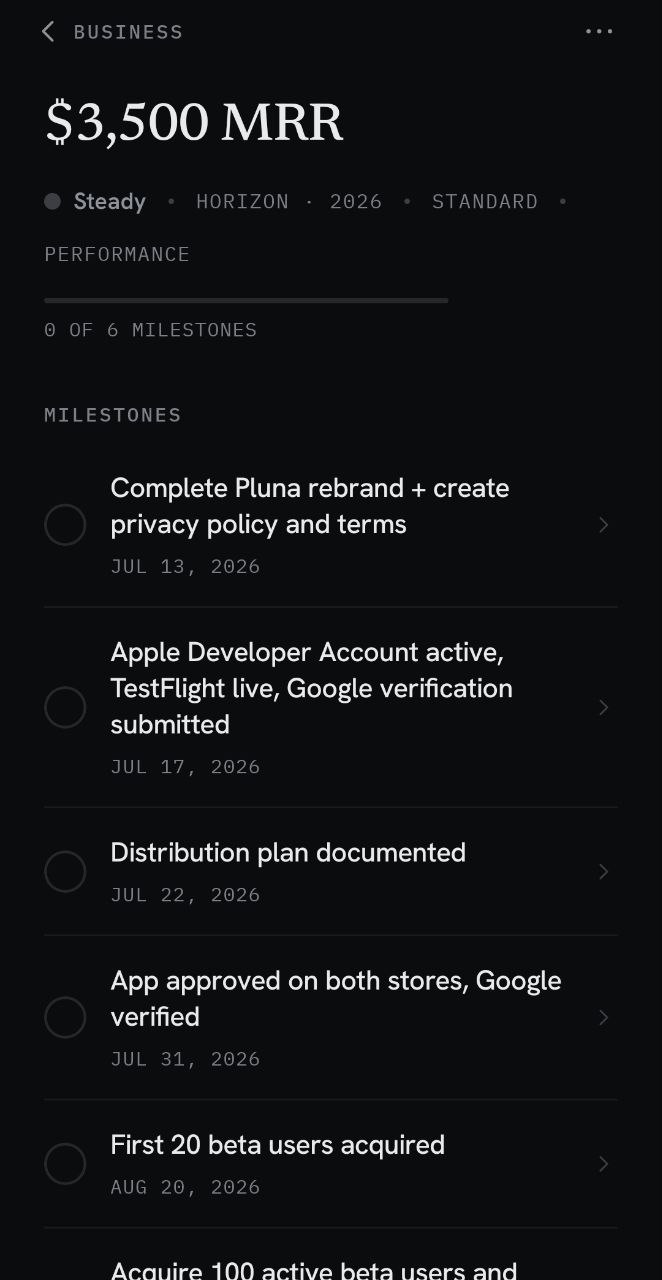
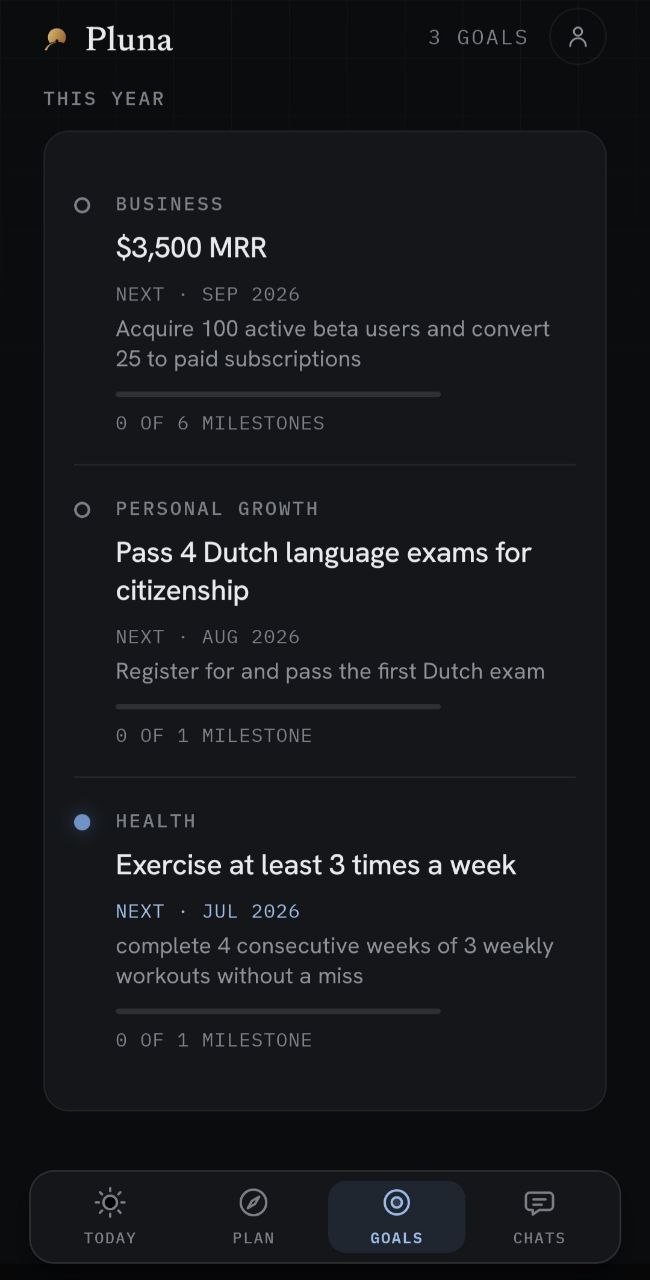
You answer a few questions about the year ahead, and Pluna builds the plan from your answers.
Why it works
You have probably quit Notion, Todoist or Habitica already. They are not bad apps. They just need you to open them first.
You have to remember it, open it and keep it tidy. One busy week and you stop.
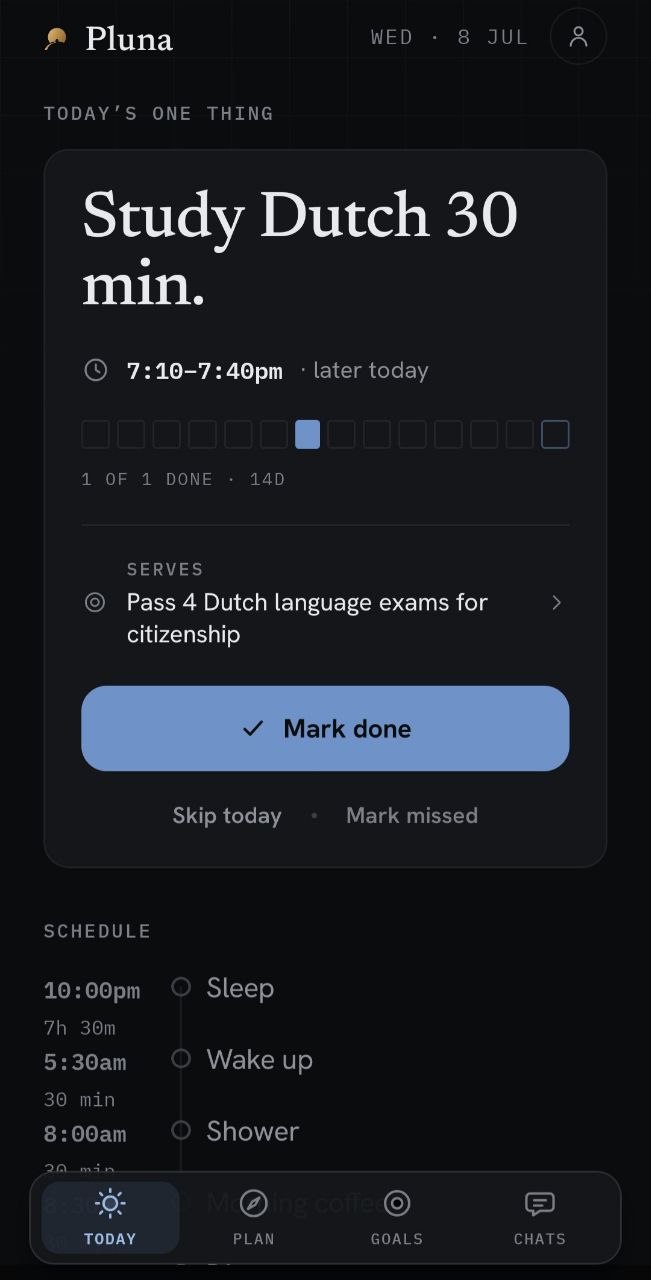
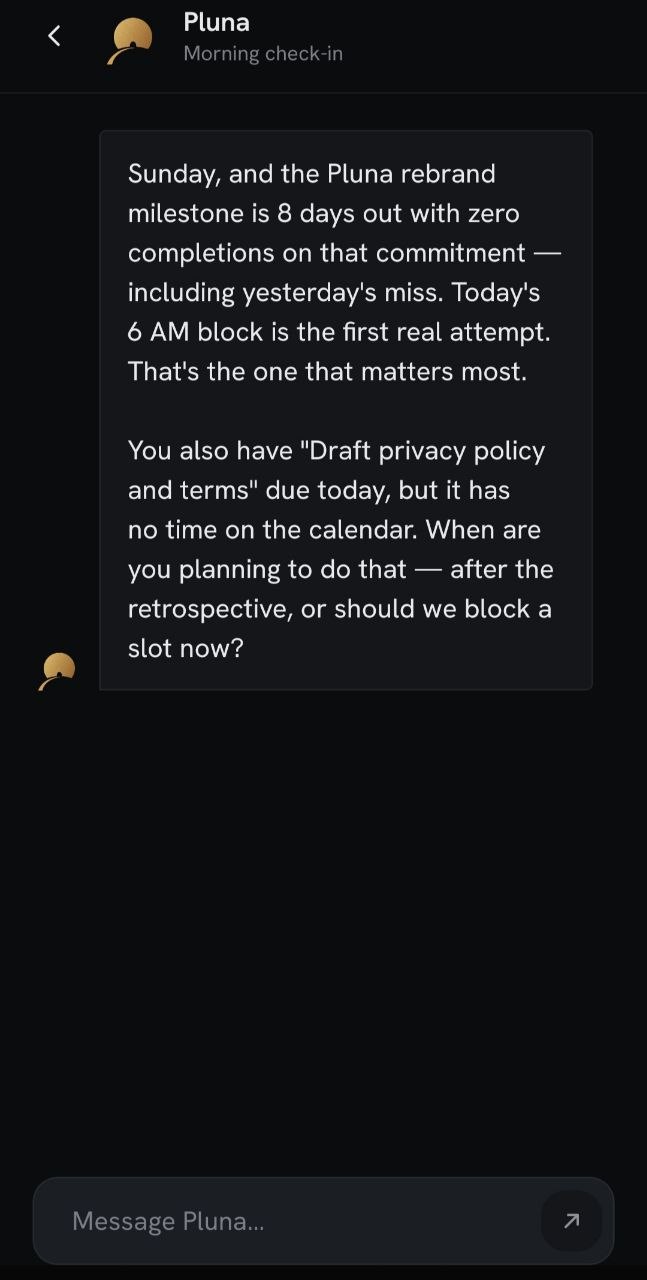
It messages you at 8:30 every morning, already knowing your goals, yesterday’s plan and today’s calendar.
The system
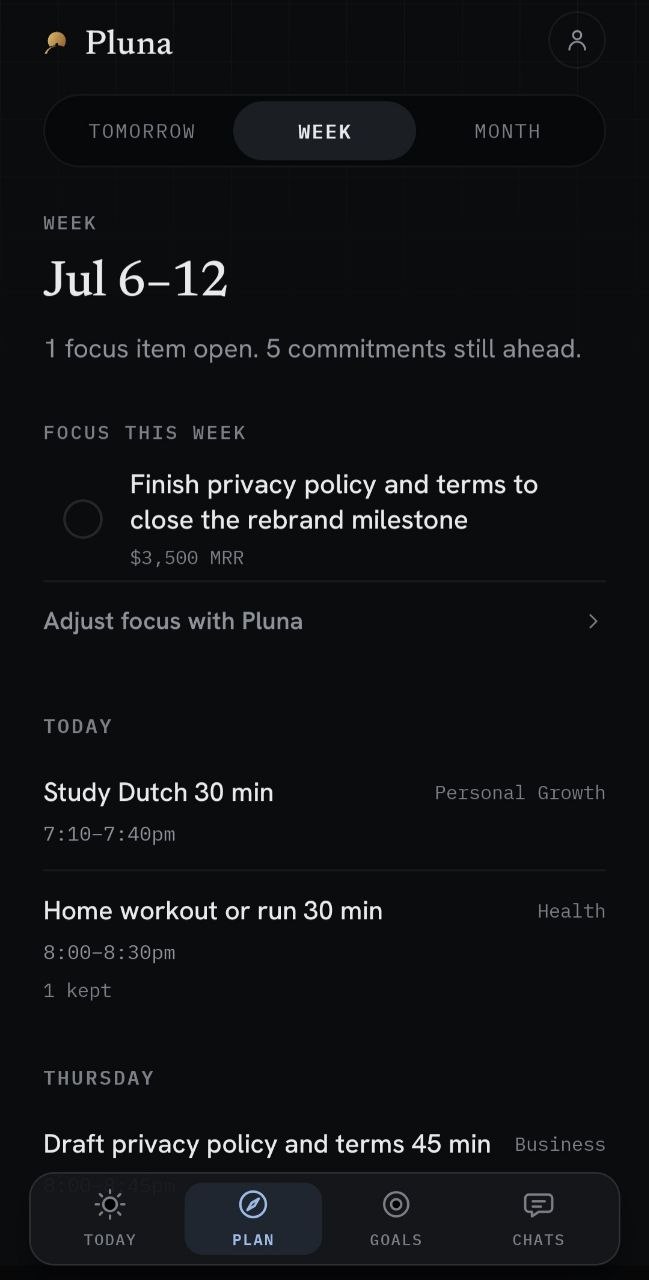
A goal on its own is too vague to act on. Pluna splits every goal into milestones with dates, and every milestone into commitments in your calendar. When your week changes, it updates them.
You describe the goal in your own words. Pluna turns it into milestones with dates and commitments that fit the time you actually have.
When a week goes badly, Pluna resizes the milestone, moves the block and tells you what it costs the goal. There is no list to maintain.
The evidence
Most goal apps do one of two things. They hand you an empty list and leave the managing to you, or they shout at you until you feel bad. Pluna does neither. The dated milestones, the calendar blocks, the morning check-in — each one is there because decades of research say that is what makes people follow through.
01 Implementation intentions
Deciding when and where you will do something makes you far more likely to do it than deciding only that you will. That is why Pluna books the work into your calendar instead of adding it to a list.
Gollwitzer
02 Goal-setting theory
Vague goals do not change behaviour; specific, challenging ones do. Pluna splits every goal into milestones with real dates, so there is always something concrete in front of you.
Locke & Latham
03 Progress monitoring
Across hundreds of studies, people who review how they are doing get further than people who do not. Pluna runs that review with you every morning, so it happens whether or not you remember to.
Harkin et al.
04 The planning fallacy
It is not a personal failing — it is how people plan. Pluna expects the overrun, resizes the milestone and tells you what it cost, rather than letting the goal quietly slip.
Kahneman & Tversky
06:41 · Tuesday
Not by you. That is the whole point.
Memory
Pluna remembers what blocked you, what you keep postponing and when you do your best work. That is what makes tomorrow’s plan realistic.
“The pricing page has moved three times. I think it is too big as one task. Let’s do just the plan cards this morning at 9:00, before your meetings start.”
In your day
Three things, every day, without you opening anything.
Add as many goals as you like. Pluna helps you choose which few to push on now, and brings them up every morning.
Pluna connects to Google Calendar and only ever changes events it created itself.
You hear about it while there is still time to fix it.
Sunday
Ten of thirteen commitments kept. Two goals on track, one slipping. Pluna tells you where you stand, then helps you plan next week.
Solo founder · building in public
Why I built it
“I set serious goals in January. By April the day job had taken over — and I hadn’t noticed how far they’d slipped.”
I built Pluna for people growing something meaningful around a full-time job. The problem was never a missing task list. It was that nobody noticed when the important work kept getting displaced.
Pricing
You get every feature during the trial, and pay nothing if you cancel before it ends. The monthly plan has no trial — it starts the day you subscribe.
$9.99/ month
Billed monthly · cancel anytime
$79.99/ year
$6.67 a month · 7 days free
7 days free on the yearly plan — then $79.99 a year, or $9.99 a month.